Thursday, 15 December 2016

Trackr device tags

A non bike fitting post for once! It's not something I've done before and it is loosely cycling related so please forgive me...

I recently purchased a few Trackr Bravo tracking devices, they use a crowd network of users to determine the location of an item every time a user passes it, so it's not quite GPS real time tracking but neat nonetheless.

I'm a sucker for losing things so actually bought them to go on various keys so I know where I last had them! But it got me thinking that these would be great on bikes, you're able to hide them as they are really quite small, around the size of a pound coin.


This would give you more chance of recovering a stolen bike (providing of course that one of the app users gets near it when it's been nicked) and whilst it has it's flaws in that sense, I like the added security for a very small cost.

You can also set the app to ring when the Trackr tag leaves it's connective range, so that's quite neat I would guess for when a burglar disappears up your driveway with your bike!

You can use this link to purchase and we both get one free if you do, so it's definitely worth considering!


Happy Riding,

Stephen


Monday, 21 November 2016

Step 2 of a good bike fit..


So you've had a bike fit?

Most cyclists now recognise the importance of having a professional bike fit, something a lot of pro cyclists have believed in for years.

In addition to a well fitted bike, pro cyclists have long recognised the importance of insoles and their effect on efficiency and comfort.

In the past however, limits in technology and the sheer cost have made custom insoles simply out of reach of most amateur cyclists.

Not any more!


What if I could open your eyes to a whole new level of comfort and performance with something that costs less than £80?


Your body relies on your feet as the foundation for good movement. If your foot isn't supported correctly you're more likely to experience pain elsewhere as a result.

The foot contains 26 bones, 33 joints, 107 ligaments and 19 muscles... That's over 25% of the bones in your body in just your feet alone.

Custom insoles can provide the support that your feet need.

I'm not talking about the off the shelf solutions you can find in your local bike shop in a range of 3 or 4 different arch heights, I'm talking fully custom, made to measure insoles to put you in the best position possible.


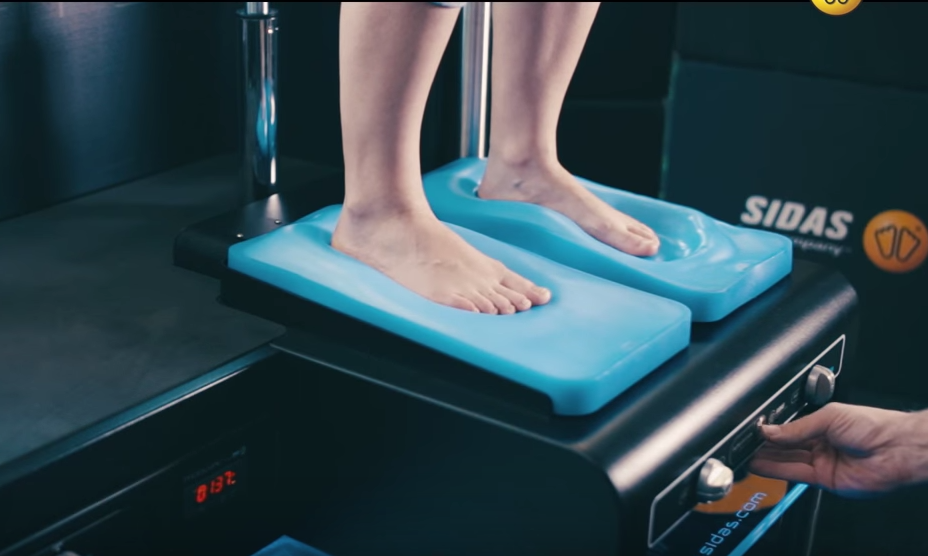
I'm a Sidas Custom dealer which means I have the experience, knowledge and tools to create a pair of custom footbeds fully in house. 

These very same footbeds will be hiding in the shoes of the cyclists riding the World Tour and other big races as riders and teams know the benefits they provide to performance and comfort.

Traditionally, custom insoles would have cost in excess of £300.. Gone are those days!

With advances in equipment and training, custom insoles are now available from Yorkshire Bike Fitting for just £79.99, suitable for us tight Yorkshire folk!

Get booked in today at http://www.yorkshirebikefitting.co.uk/booking.html


Tuesday, 2 August 2016

Yorkshire Bike Fitting is now a Sidas Custom fitter!


I'm really pleased to be able to announce a new partnership with Sidas as a supplier of their fully custom insoles.

I've had my eye on Sidas for a while now and with their fantastic range of insoles/footbeds and their industry leading lab equipment, it's the perfect match for my fitting services.


I'll be offering custom insole fitting alongside my normal professional bike fitting services at the Meanwood fitting studio.


Your feet are an amazing body part, with a combined 52 bones for a pair! With various ligaments, muscles and tendons attaching to these bones, it's vital that your foot is in the correct alignment to avoid any excess pressure or stress to the foot. When cycling shoes are pulled tight, it's common to find that your foot is forced into a really unnatural and unforgiving position. A custom cycling insole is a great way of ensuring correct foot position even when your cycling shoes are done up tight.

Think about the foundations of a house, if built incorrectly it's likely that the building on top will suffer structurally as a consequence. It's exactly the same with your body.


A pair of Sidas fully custom insoles from Yorkshire Bike Fitting costs just £79.99 which is less than a pair of good quality cycling shorts, for something that is responsible for your comfort, performance and keeping you injury free!

Without the support offered from a custom insole, it's more than likely that everything above the foot won't be functioning correctly either. In the vast majority of my fittings, I see problems with the knees, hips and back. A set of good quality custom insoles can help put those problems to sleep, for good! 

An average 2 hour ride involves over 10,000 pedal strokes, that' s a lot of pressure on a poorly supported foot!

Book your insole fitting session at www.yorkshirebikefitting.co.uk/booking.html

Wednesday, 30 March 2016

Bike sizing guide

Unsure how to choose the right size bike? Do you need bike geometry explaining? or just curious about bike sizing? Read on!

So, you're looking for a new bike and you're trawling the internet looking at all the fancy specifications listed on the shops website. You like the carbon wheels or electronic gears (maybe both if you're really fancy!)How much attention have you paid to the geometry chart on the website? Lots, some, or maybe none at all!

I'd say the geometry of a bike or the "fit" of a bike is more important than the spec every time. If a bike doesn't fit your body right, you'll struggle to get any kind of power out on those climbs, and it will more than likely handle very poorly downhill! There are a few key measurements you need to bear in mind when choosing a bike that fits.

Head tube - This is the tube at the front of the bike, that your forks slot through and your stem/bars attach to. I suggest for leisure/sportive riders, the higher the better to bring you into a more relaxed position. For racing cyclists I usually recommend a shorter head tube to allow that aggressive aero position that saves energy during races!

Seat tube - This is the tube that your seat post slots into, its height will ensure that your correct saddle height is achievable. Too short and you won't be able to get your saddle height right without a super long post. Too long and you won't be able to drop your saddle low enough to get the correct seat height!

Top tube - This is the tube that runs between the head tube and seat tube. It's length determines the reach of the bike. If it's too long for you, you'll struggle to reach the bars without a tiny stem (this brings the handling quite twitchy and horrible!). If the top tube is too short for you, you'll end up doing the opposite and bringing the stem longer to compensate which can make the bike handle slowly and almost wallowy in some cases.

Stack & Reach - Stack is the distance (measured vertically) from the centre of your frame's bottom bracket to the top of the head tube. Reach is the distance (measured horizontally) from the centre of the bottom bracket to the top of the head tube. Over the years, I've come to realisation that head tube and top tube are most important (in my opinion anyway!) as without these being correct, you'll end up with a really wacky position to compensate for a stack/reach that doesn't suit you.

I've put together a rough guide for sizing if you can't get in for a bike fit prior to purchasing your new bike. In an ideal world, you'd come see me before a fitting as I can advice very accurately on bike size, but if you can't get in, base your size on the tables below and come see me when you've got it!


Here's the Mens guide:


and here's the Womens guide!


If you would like any more information or help on bike sizing or which bike size to choose please do get in touch. You can contact me via any method on www.yorkshirebikefitting.co.uk , Stephen@yorkshirebikefitting.co.uk or call me on 07903532455


Tuesday, 16 February 2016

It can pay to check your bike over once in a while!

Morning Folks!

Yesterday I had a 2015 Giant Propel brought in for a fit, the customer had travelled over 2 and a half hours to see me and hadn't even thought to check his bike before he came!

Given that the bike was only 5 months old (bought Oct '15) I was surprised to discover that the seatpost was stuck into the frame!

I ended up recruiting the help of my customer to give me a hand in getting it out, and when we did so, found that the clamp itsself (a little wedge inside the frame on the propel, a funny design which also means you can't get a torque wrench on properly.. Oops on Giants part!) was corroded into the frame too!

Once I'd managed to get that out, I cleaned both parts up, put in some carbon paste and continued with the fit.. Had the customer not had the fit, and left the post another 6 months, there is little doubt in my mind that that post would never have been coming out!

Please do check your frame/components regularly and keep them well maintained to avoid potentially costly mistakes like these!

I use Morgan Blue grease and carbon paste and really like the stuff! Keep some in your shed and use it to fettle your bikes every now and then!

Here is a picture of the seatclamp design and the corrosion on it!


Sunday, 31 January 2016

I guarantee faster times on Strava. No questions asked.


GUARANTEED FASTER TIMES ON STRAVA. OR YOUR MONEY BACK.


I'm the first bike fitter in England to offer a full money back guarantee on bike fitting.

I am that confident in my ability to help you improve, that if you don't shave time off your rides within 28 days of your initial fitting session, you get 100% of your money back, no questions asked!*

With my dynamic bike fit process and experience within the bike fitting industry, I see a whole variety of people, from avid sportive riders to professional racers, I fit any bikes, not just a particular brand, and can supply and fit any correct sized parts to ensure your bike fits you the best it possibly can.


Bike fitting in its best form.

I work by fitting your bike to you, not you to your bike. 

Through postural analysis, flexibility and range of movement testing (as well as a few other tricks of the trade), I can make sure that you are in your optimum position without increasing your risk of injury! Added to my background as a Sports Therapist, my knowledge of how your body works and how to maximise your performance will ensure that I help you to get the most out of your time on the bike.

If you'd like to talk further about how I can help you, or if you have any questions, please email me on Stephen@yorkshirebikefitting.co.uk or visit www.yorkshirebikefitting.co.uk

Happy riding!

*Offer only applies to advanced and pro fitting sessions purchased from 01/02/16, refunds exclude any special order items, standalone services such as cleat fitting, wedges, or parts fitted to the bike.

Sunday, 24 January 2016

Benefits of Speedplay pedals!

So you've seen those lollipop lookalike pedals on peoples bikes at the local events, have you wondered what they are?

They are made by a company in Canada called Speedplay and come in a few different forms, the most popular being the Zero and Light Action versions, I'm going to cover the benefits of the Zero ones in this blog.

There are 7 main benefits to using Speedplay, I'll go through them below!

1) Adjustability - Position of Speedplay cleats is really important, as that's the only way you'll get the most out of them, a bit like any cleat I guess! But when it comes to Speedplay, you won't get much more adjustability from any other brand. You can adjust the cleat on all 3 axis independently of each other, something that no other brand offers.

           The real standout feature for this is the ability to dial in exactly how much float you want, but more importantly in what direction, for example you can have as much movement as you like to the outside (up to 15 degrees) but none to the inside, or a little either side of the correct position, it's entirely customisable to suit your needs. Float can be adjusted when you're on the bike too if you've got a handy assistant or a professional bike fitter to hand!

2) Durability - Maintenance of Speedplay pedals and cleats is probably one of the easiest things you can do with your bike, just pop the little end cap off the pedal with a small phillips head screwdriver and use a needle nose grease gun (available from www.yorkshirebikefitting.co.uk) to inject some fresh grease in until the old stuff comes out of the axle side of the pedal body.. Easy really!  Cleat wise, just squirt a little bit of dry lube on the black sprung clip after every few rides and you'll be right as rain!

3) Dual sided entry - Yes, for all you SPD-SL and KEO users out there, this will sound like a revelation for you, although for the SPD users often found on mountain bikes, it will be second nature. It makes it mega easy to clip in and out at traffic lights with Speedplays, you won't be fumbling around trying to flip your pedal over round the the engagement side any more!

4) Large pedal platform - Means that you can apply maximum power to the pedal with minimum pressure to the foot, avoiding nasty numbness or discomfort in the feet!

5) Cornering clearance - You'll be able to put the hammer down round corners whilst those behind you will have to freewheel due to the added clearance that Speedplay pedals offer vs other brands.

6) Weight - Speedplay pedals are some of the lightest available, and will be the perfect addition to your lightweight summer steed!

7) Spindle length - Speedplay manufacture their pedals in 4 different spindle lengths, avoiding the need for bulky axle extenders in order to get the right fit. (I can help in determining the correct Speedplay axle length for you)

In short, Speedplays are going to be great for you if:


  •  You're looking for the bit of extra added performance or comfort
  • You've previously struggled with lower limb joint issues (seek professional bike fit advice)
  • You want a high level of customisation when it comes to the cleat/pedal interface
I can advise you on whether Speedplay is suitable for you, the best way to go about fitting cleats to you (whether through your own adjustments or via one of my bike fitting services) or the best pedal out of the range to suit your needs (there are so many different options it can be quite confusing!)

If you'd like more information, just drop me a line on Stephen@yorkshirebikefitting.co.uk !

I am also currently offering discounts on all speedplay pedals in stock (over 33% in some cases!)


Wednesday, 7 January 2015

G8 insole fitting in Yorkshire, bike fit in Leeds with Yorkshire Bike Fitting

As well as things like wedges, kinesio taping, and various other fitting tools, I also provide insole fitting alongside my bike fitting services.

This can be as part of a bike fit, or as a service in its own right.

The foot is one of the most important areas of a bike fit, and deserves the right support in the shoe. This will not only help avoid inflammation/injuries of the foot, but also aid in ensuring that the pedal stroke is correct too.

I use an Australian brand of insoles, G8 Performance, which I have found to be leaps and bounds ahead of competitors at a comparable price point.


When fitted correctly, they provide both the transverse and longitudinal arches of the foot.

This is really important when dealing with cyclists doing any kind of serious milage. If you didn't know already, the arches are built up of bones called metatarsals and tarsals, supported by ligaments and fascia and covered in adipose tissue.

When allowed to flatten, these arches can cause issues further up the leg, most common in the knees, but occasionally into the hips and back too.

G8 insoles provide me with a method of dealing with "flat feet" so to speak, and bring everything back into its correct alignment.

One of the main reasons they work so well is that they don't just work as a quick fix solution. The arch longitudinal arch support has enough flex in it to allow the foot to stretch and strengthen with time, whilst providing ample support to keep alignment correct.

They also include a metatarsal pad which spreads the metatarsal bones (the bones at the start of your toes) whilst the arch lifts them slightly. This promotes blood flow, which helps to combat one of the most common cycling ailments, numb toes.

Sorry for the Wednesday morning science lesson, but I wanted to share some interesting facts with you!

As far as I'm aware, I'm the only person to use G8 insoles locally, due to their fairly specialist nature, but hope to see more people using them soon due to their unrivalled results!

As always, don't forget to check out www.yorkshirebikefitting.co.uk for information on all of the services that I provide as part of my bike fits in Leeds.

Thanks,

Stephen

Monday, 22 December 2014

Cleat Wedges at Yorkshire Bike Fitting

Let me introduce you to one of the most valuable fitting tools I have..


This is called a wedge, and whilst there are many variations, cleat wedges are often the most popular in the industry.

Have you ever noticed that one knee comes in closer to the top tube than the other? Or do you suffer from numb points/hot spots on your feet?

Wedges are really effective at bringing the foot back into it's natural position, which is often ignored during some bike fits, especially the measurement style fits that some fitters offer that don't necessarily look at the rider on the bike.


The method of fitting wedges includes the use of a forefoot measuring tool, which determines the number of wedges required to correct the tilt. You simply hook the end piece over the heel of the foot and read off the number the arrow on the device is pointing to.

A good fitter will know what these numbers mean, and the correct style/number of wedges to use.


Cleat wedges fit under the cleat, and insole wedges under the insole (not surprisingly) and act in slightly different ways.. Whilst I won't bore you with the details, in most cases I use insole wedges, as they encourage the foot back into the natural position, which most modern cycling shoes force it out of, which is when things like numb toes start to appear.


When combined with correct cleat positioning, wedges are a great tool for any cyclist, and are well worth their relatively low cost!

Cleat wedge use comes as standard on my advanced and pro fit services, full details of which can be found on www.yorkshirebikefitting.co.uk


Wednesday, 6 August 2014

The importance of choosing the right fit consultant.


 So you’ve bought your brand new bike, spent hundreds of pounds on all the fancy gear, pedals, shoes.. the lot!

The shop have “fitted” you by eye on the shop floor before you leave for your first ride, everything seems great, until you hit the local roads and find a niggling pain somewhere. It’s often numb toes, or sore knees, and it’s super, super annoying, you’ll probably persist with the pain for a few rides, but it’s not clearing up!

Your first port of call will more than likely be local shops who offer “specialist” services with fancy marketing material and claims of high tech services with all the bells and whistles.

These services can often be compared to a beginner pianist performing on a grand piano.. They may not have the skills necessary to perform well with the equipment, and fail to get the desired result.

When you think of a bike fit, you should consider that you’re spending money on a service, and that level of service can fluctuate massively from one fit consultant to the next.. The fitter that you want fitting your bike has to know the human body inside out, and it’s abilities to cope with different positions on the bike.

Whether it’s crit racing twice a week, a sportive once every 6 months, or just riding for fun, your position will be different to the next client, and needs to be right for you.

I’m a firm believer in working with numbers, angles and measurements, whilst using common sense too. The data gives a high degree of accuracy and predictable results, whilst harnessing your common sense ensures that you don’t just follow these numbers blind and make obvious, stupid errors.

Since starting fitting, I’ve conducted over 300 fits, and have learned a vast amount of fitting related things. I combine this knowledge of fitting with my experience as a sports therapist, and the understanding of human anatomy I have developed over my career.

This enables me to provide some of the highest quality bike fitting available in Yorkshire.

Why would you invest in a service of poor quality from a shop that specialize in the sales of bikes, not the mechanics of the rider?

You wouldn’t expect the salesman from the garage you bought your car from to be able to conduct the MOT/Servicing of that vehicle, so why would you expect the salesman of your bike to be able to conduct a high quality fitting service?


As someone who’s ridden in sportives, raced midweek town center crits on the national series, competed in road races and dabbled in a bit of time trialing, I don’t just know the fitting process inside out, but also the sport!

Enough about me now! Here are my 5 top tips for picking the right bike fitter!

1)   Look for deeper knowledge than just a bike brands own training course.
2)   A shop with a dedicated area is more than likely more serious about fitting, if it’s half fitting room half storage space, avoid!
3)   Look for someone who’s worked with a range of athletes, as they will have the broadest range of experience.
4)   Price doesn’t always represent level of service, if one fit costs more than another, ask why, usually it’s just a boutique shop adding a premium on!
5)   Don’t be sucked in by fancy marketing material, get the key facts such as level of training, areas covered in the fit, the fitters specialist areas and price!


This isn’t meant to be a “pick me” style advert, it’s meant to give you an idea of the other services that exist out there, and the reasons why you should pick a specialist as opposed to anyone who offers the service..


The importance of bike fitting

Position is often underestimated by riders, and they won't even have considered it when buying a high value or performance bike.

Things I aim to cover are the importance of:

1. Cleat position
2. Insole use / Cleat Shims & Wedges
3. Saddle position (both height and fore/aft)
4. Choice of saddle
5. Stack height of front end
6. Stem length/angle
7. Bar width / type

1) Cleat position is something that can't be ignored when doing serious milage on the bike, and falls into three different adjustments:

  •     Angle: If you think of cleat positioning as being similar to the tracking of steering on a car, if the tracking is out, the tyres wear to either the inside or the outside more, likewise, if cleat angle is out, your knees are open to injury, and knees can't be easily replaced like tyres can!

  •     Setback: The mentality of 10 years or so ago tended to suggest that the centre of the pedal axle, this has changed now, and the position shouldn't be directly on the ball of the foot, or problems with nerves and soft tissue can arise.

  •     Stance width (q factor): effectively how far away your foot is from the crank arm is determined by lateral/medial cleat positioning and is vital for a good pedalling action.


2) Insole use should only be considered when seeking the advice of a fully trained bike fit consultant or suitable therapist. My background in both disciplines as a sports therapist, and a bike fit consultant means I have a good understanding of their uses and their effects on the mechanics of the pedal stroke whilst cycling. I only consider insoles when one or more of the following things arises during the fit:


  •     The tracking of the knee isn't correct, causing muscles to fire in the wrong order or causing compensation issues in other areas

  •     The arches in the clients feet are dropped.

  •     Shims are used when the tracking/alignment of the knee is incorrect, and should only be used by a trained fit consultant


3) Saddle position falls into two categories, height (measured from centre of BB to top of saddle) and fore/aft (measured in setback from BB)


  •     Saddle height should be determined according to the flexibility, range of movement and injury history of the client, a saddle too high can stretch various areas and increase the risk of injury, a saddle too low can affect knee tracking and also cause injury.

  •     Fore/aft is set by knee over pedal spindle, and this affects both power output (argument suggests the further back it is the more power you can put out) and bike handling (due to altering the centre of gravity over the back end of the bike)


4) Choice of saddle is vital to any bike, regardless of milage. A saddle chosen through a system like the Bontrager Inform range is a fantastic idea, as it has an unconditional comfort guarantee, so if it's not comfy, they will have it straight back! This is due to the instore system that measures the width of your seat bones, and you purchase a saddle that corresponds to those widths. Simple yet effective! A good saddle will:


  •     Support you in the correct place (in terms of width) providing setback is correct.

  •     Allow free movement of your legs (some wider saddles hinder this)

  •     Provide superior comfort even on long rides.


5) Stack height of the front end refers to how high the front end of the bike is, some of this is pre determined by the height of the headtube of the bike, but additional spacers can be placed under the stem to raise the front end up. A lot of cyclists, especially those who race on the road, will be tempted to drop the front end as low as possible, even if this is past their physical limits, they fight through the pain, and their performance suffers as a result! No matter how aero your position is, if you can't cycle without pain, you won't perform as well as you would pain free. A reasonable stack height should:

  •     Provide the rider with enough room at the top of the pedal stroke to fully inhale. If this isn't possible, the muscles won't get enough oxygen, and the rider will be more prone to cramping.

  •     Allow the rider to look straight ahead when on the hoods without strain. Strain will eventually lead to tightness in the shoulders/neck and probably headaches!

  •     Be determined according to saddle height in most cases, to regulate the drop from saddle to bars, seeing as the saddle needs to be in the correct position. The amount of drop a rider can cope with varies from rider to rider.


6) Stem length is a bit of a funny one, as its often personal preference, and people know what they like and like what they know. Unfortunately, this is like anything, just because their mate down the pub told them its correct, it doesn't mean it is. As you would imagine, stem length alters the reach to the bars and also the height of the bars depending on the angle of the stem. Choosing the correct stem enables the rider to:


  •     Ensure the bike is handling correctly.

  •     Make sure the reach to the bars is suitable to the riders style and disciplines.

  •     Fine tune their position for aero advantages/comfort.


7) Bar width / type is very important when looking at bike positioning. Width is determined by measuring the width of the shoulders from two bony landmarks on either side, and the handlebar width should be as close as possible the the width of the shoulders in my opinion. This opens up the shoulders and back to avoid fatigue/pain in the shoulder region.


  •     Another school of thought is that a wider bar gives you more leverage for steering and opens your chest for more volume of air, i.e. more oxygen into your lungs. But that depends on the individual rider and their discipline of riding.


SUMMARY:

In brief, no one measurement I have gone into will make for a good bike postion. When every part of the postion on the bike is correct, thats when things "click" into place and everything just feels right.

Speaking from experience, you just know when your position on the bike is correct, and until you've had a bike fit, you wont know this feeling.

The chances are that at least one of the variables of your bike postion isn't right, and it may be the missing link in the chain to take the next step in performance or comfort.

It's worth getting it checked, so get in touch today!

Stephen@yorkshirebikefitting.co.uk